
Spanish Wells Deepwater Homes: Essential Considerations for Buyers
April 16, 2026
April 16, 2026
If you are drawn to Spanish Wells for its deepwater lifestyle, you are not alone. This part of Hilton Head Island offers a rare mix of waterfront setting, larger homesites, and direct ties to boating, fishing, and life on the water. Before you buy, it helps to understand how tides, docks, flood zones, and long-term ownership costs can shape both your experience and your budget. Let’s dive in.
Spanish Wells sits in a distinctive waterfront setting in Beaufort County, framed by Calibogue Sound, Old House Creek, and Broad River. The Town of Hilton Head Island identifies Spanish Wells as a historic Gullah neighborhood, and the Spanish Wells Club sits directly on Calibogue Sound and the Intracoastal Waterway. That location is a big reason buyers focus so closely on deepwater, marsh, and sound-front ownership here.
The community is also relatively low density. According to the town’s 2024 Conditions & Trends Assessment for the Marshes District, Spanish Wells has a total capacity of 190 homesites, with just 13 remaining unbuilt lots. For you as a buyer, that mostly built-out pattern can mean limited future supply and a setting that already feels established.
Spanish Wells is often described in local market guides as a community with generous homesites, many at or above one acre. While those figures are best viewed as market descriptions rather than official plat data, they still reflect how buyers experience the neighborhood in real life.
For you, a larger lot can offer more privacy, more flexibility for outdoor living, and more room for features like expanded driveways, pools, or dock-related improvements where allowed. The tradeoff is simple: more land often means more maintenance, more landscaping needs, and higher carrying costs over time.
For many buyers, the headline feature is access to the water. The Spanish Wells Club amenities include a deep-water day dock and pier-head on Calibogue Sound, along with activities tied to boating and waterfront recreation. That supports the area’s long-standing relationship with the water, which the town also connects to local history, including fishing, crabbing, oyster harvesting, and boat travel.
If you value coastal living that goes beyond views alone, this matters. In Spanish Wells, water access can influence how you use the property day to day, whether that means heading out by boat, launching a kayak, or simply enjoying a dock at sunset.
One of the biggest mistakes buyers make is assuming all waterfront lots perform the same way. They do not. Nearby NOAA data from the Port Royal Plantation tidal station shows a mean tidal range of 6.10 feet, which is substantial enough to affect docking conditions, launching, and boat draft.
That means a property that looks ideal during one showing may feel very different at another tide level. If you plan to keep a boat, you will want to ask whether the dock is usable at mean low water and whether your boat’s draft works comfortably without waiting for higher tide.
Even if a home has water frontage, it is still smart to understand nearby public access points and boating conditions. Beaufort County’s Cross Island Boat Landing offers 45 parking spaces, a courtesy dock, and access to Broad Creek and Calibogue Sound. Other nearby access points have different limits, including shallow-water use or reduced parking.
The takeaway is that boating convenience is never one-size-fits-all. You should look at the property itself, the tide pattern, and the nearby launch options together if boating is central to your lifestyle.
In a deepwater community, the dock deserves the same attention as the house. Before you write an offer, confirm whether the dock is private or shared, who is responsible for maintenance, and whether the structure is properly permitted. You should also ask whether future changes, such as repairs, extensions, rebuilds, or lifts, may require county approval through Beaufort County’s permitting process.
This is where careful upfront review protects you. The key question is not only whether a dock exists today, but also whether you will be able to legally maintain or improve it later.
In Spanish Wells, flood exposure is not a side issue. It is part of the ownership picture. According to the City of Beaufort’s flood awareness guidance, storm surge from hurricanes and tropical storms is the greatest threat in coastal areas, while extreme high tides and heavy rain can also cause flooding.
FEMA flood maps are the official reference, and structures in a Special Flood Hazard Area have a 26 percent chance of flooding over a standard 30-year mortgage. If the home is in the SFHA, flood insurance is mandatory. Just as important, flooding is not covered by a standard homeowners policy.
It is easy to assume a community-wide reputation tells you enough about flood risk, but waterfront ownership is more specific than that. Parcel-level differences matter. You should confirm the exact FEMA flood zone for the property and compare it with neighboring lots rather than relying on broad assumptions.
This also matters for your budget. The city notes that more than 25 percent of flood claims happen outside the 100-year floodplain, so even an X-zone or C-zone parcel should not automatically be viewed as low risk.
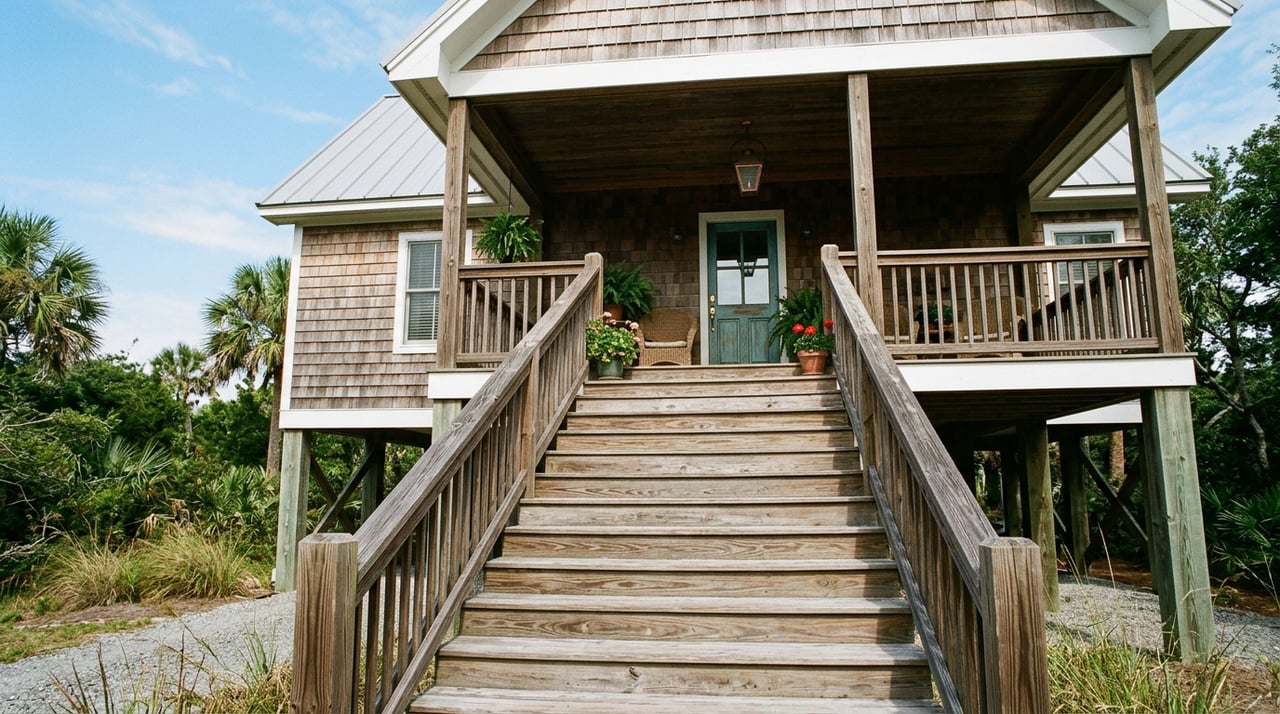
Elevation is one of the most important details to review before you commit. The city’s flood guidance notes that if the first finished floor is below FEMA base flood elevation, elevation should be considered. Requirements vary by zone, and construction standards in A Zones and V Zones differ in meaningful ways.
For you as a buyer, this can affect insurance costs, renovation plans, and long-term value decisions. Requesting the current elevation certificate early is a smart move, especially since elevation certificates for structures new or substantially improved since 1996 may be available through the city or county.
The purchase price is only one part of the equation in Spanish Wells. Waterfront ownership often comes with recurring costs that deserve careful review before contract. These can include:
None of these items should be treated as a surprise after closing. When you understand the full carrying cost early, you can compare properties more clearly and make a more confident decision.
If you plan to use the home seasonally or as a second residence, storm logistics matter too. Beaufort County’s flood brochure notes that Hilton Head Island evacuates via US 278 to I-95 and US 17 north. That is a practical detail worth factoring into your planning if you will not be on site year-round.
Owning on the water can be incredibly rewarding, but it works best when lifestyle goals and logistics line up. A thoughtful buying process helps you enjoy the setting with fewer surprises later.
Before moving forward on a deepwater home in Spanish Wells, make sure you can answer a few key questions:
The right property is not just the one with a view. It is the one that fits how you want to live, what you want to maintain, and how you want to use the water.
Deepwater living in Spanish Wells can offer privacy, beauty, and a true Lowcountry waterfront lifestyle. It can also bring more complexity than a typical inland purchase. When you evaluate tides, dock rights, flood exposure, elevation, and carrying costs early, you put yourself in a much stronger position to buy well.
If you are considering Spanish Wells or another waterfront property on Hilton Head Island, working with a local advisor who understands the details can make the process smoother and more strategic. When you are ready for a private consultation, connect with Kelly Ruhlin for thoughtful guidance tailored to your goals.
Stay up to date on the latest real estate trends.



When it comes to buying or selling a home, it takes more than listings and offers — it takes a trusted partner who understands your unique goals. With Kelly Ruhlin, you’ll receive expert market insight, personalized advice, and a seamless experience from start to finish.