
Spanish Wells: Club Amenities, Nearby Dining and Pinckney Island Trails
August 20, 2026
August 20, 2026
Ask someone who has lived on the peninsula for a decade what Spanish Wells offers and they will mention the dock first, then the nine holes, then maybe the tennis courts if they play. It is a short list, and that is by design. What they will not mention, at least not right away, is that most of their actual week happens somewhere else entirely, a few minutes down Spanish Wells Road, past the community's own security checkpoint, in a stretch of Squire Pope Road that belongs to no HOA at all.
That is the thing worth understanding about this neighborhood. Spanish Wells was built to be quiet and self-contained, and it is. But the daily rhythm residents actually keep runs on a tight loop that starts inside the property line and ends just outside it, at restaurants and a wildlife refuge that Spanish Wells itself has no claim to and no responsibility for maintaining.
Start with what the club actually has, because the scale tells you something. Spanish Wells Club's golf course opened in the late 1960s, designed by George Cobb, an architect known in part for his work with Augusta National's membership. It got a full renovation in 2005 from Clyde Johnston, a Lowcountry-based course architect, who rebuilt the tees, bunkers, greens, irrigation, and cart paths. The course plays to a par of 36 across nine holes, 3,053 yards from the back tees, with a rating of 35.2 and a slope of 124. Members use two different tee sets to turn it into an 18-hole round.
That is a modest footprint for a private club. No back-to-back eighteen, no second dining room, no separate racquet building. The clubhouse holds the Holbrook Grill, run by Chef Taylor Smith, along with four Har-Tru clay tennis courts and a pickleball setup that has grown alongside the sport's broader popularity. The dock stretches about 100 feet into Calibogue Sound, with a pavilion and a floating section for crabbing and fishing.
None of this reads like a resort, and it was never meant to. It reads like a clubhouse built for people who already live nearby and want somewhere close to launch a kayak or catch a sunset, not somewhere to spend a full day. The nine-hole course, the single grill, the one dock: these numbers are small because the community around them is small too, somewhere around 200 homes spread across roughly 400 acres of a peninsula bounded by Broad Creek on one side and Calibogue Sound on the other.
Here is where the loop opens up. Spanish Wells Club has one restaurant. The neighborhood's actual dining rotation has closer to half a dozen, and every one of them sits outside the property, along Squire Pope Road and Spanish Wells Road, in a stretch that residents share with the rest of the island's north end.
Hudson's Seafood House on the Docks has operated as a family business for years on Skull Creek, specializing in fried local seafood, shrimp, oysters, and hush puppies. Next door sits Skull Creek Boathouse, whose Marker 13 Buoy Bar overlooks the Intracoastal Waterway and Pinckney Island's tree line, and has picked up recognition as one of the region's better outdoor bars. Down the same corridor is a smaller, odder find: a barbecue spot called Snack Bar, open only Thursday through Saturday, noon to four, at 575 Spanish Wells Road. It is not the kind of place that shows up on a resort brochure, and that is exactly why it stays in rotation for people who live here year-round rather than visit for a week.
None of these places belong to Spanish Wells. They belong to the corridor Spanish Wells happens to sit next to. The neighborhood's real food culture is a shared resource, not a private amenity.
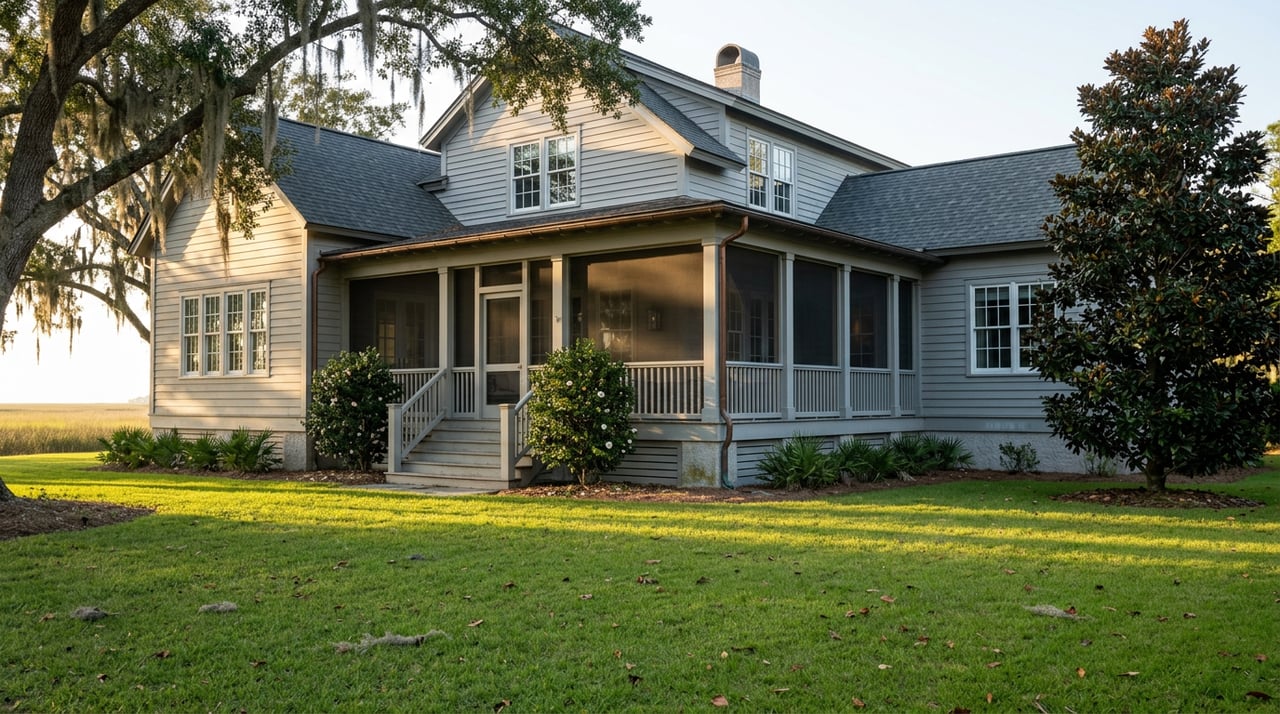
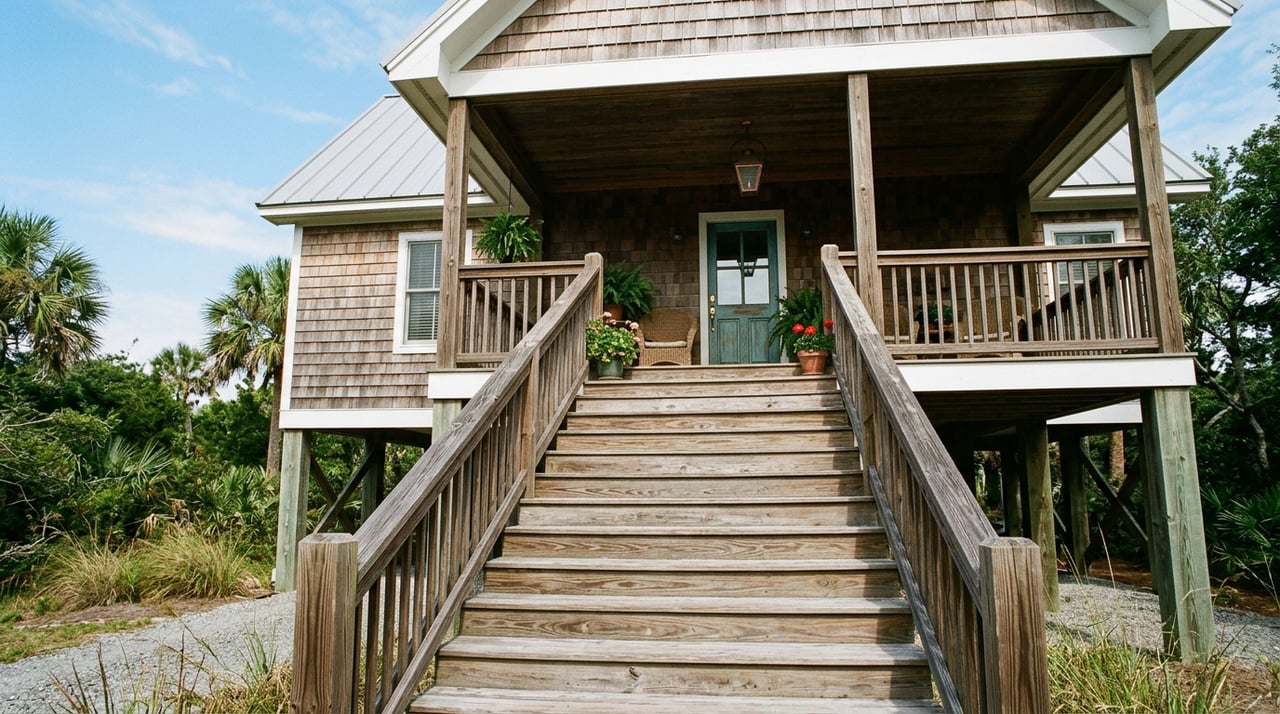
Spanish Wells maintains about two miles of its own walking and biking paths inside the community, quiet roads shaded by oaks that residents use for the loop between the club and their own front doors. That is a fine, comfortable distance for a morning walk.
Then there is what sits just before the bridge onto the island, a short drive from Spanish Wells Road: Pinckney Island National Wildlife Refuge, 4,000 acres across several small islands, with 14 miles of trail open to hikers and cyclists, free of charge, from sunrise to sunset. Two-thirds of the refuge is salt marsh. The rest is maritime forest and freshwater ponds, including Ibis Pond, where wading bird rookeries draw egrets and herons close enough to watch without binoculars. Alligators show up regularly along the pond edges, along with white-tailed deer and, for those who spend enough time on the wooded stretches, armadillos rooting through leaf litter.
The refuge has no restrooms, no drinking water, and no staff on-site, since it is managed remotely from the Savannah National Wildlife Refuge headquarters in Hardeeville. That unstaffed, unpolished quality is part of what keeps it uncrowded even in peak season. For Spanish Wells residents, it functions as an extension of their own trail network, seven times the mileage, at no cost, maintained by the U.S. Fish and Wildlife Service rather than the POA.
The local history here draws on Here Hilton Head's account of Spanish Wells. Before the club opened in the late 1960s, the peninsula was a working fishing community. Charlie Simmons Sr., known locally as Mr. Transportation, ran Simmons Fishing Camp here, a stopover for travelers crossing to and from the mainland in the years before the bridge made that crossing simple. The same stretch of land also housed a boxing gym that trained the Cohen family, who went on to become professional heavyweight boxers. Part of the area still carries a Gullah neighborhood designation, a recognition of the community's roots that predate the golf course by generations.
That history does not compete with the quiet, oak-lined version of Spanish Wells that exists now. It sits underneath it. A community built around a private golf club and a deep-water dock grew out of a fishing camp and a boxing gym, and the peninsula's name itself goes back further still, to Spanish explorers who came ashore looking for fresh water centuries before any of that.
None of this is an argument that Spanish Wells needs more amenities. The opposite is closer to true. The community works precisely because it stays small and lets the surrounding half mile do the rest: a wildlife refuge seven times its own trail mileage, a restaurant row it shares with neighbors, and a history that gives the peninsula more texture than the words secluded or private usually suggest.
For anyone who already calls this stretch of the island home, that is worth knowing, if only because it explains why the place feels settled rather than manufactured. The club stays modest on purpose, with restaurants, trails, and the rest of the island close at hand.
If you are weighing what a Spanish Wells property is actually worth given that setup, or thinking through what a build or renovation looks like on one of the peninsula's larger lots, Kelly Ruhlin has spent years working this specific stretch of the island and can walk you through it. You can also browse current Spanish Wells listings and neighborhood details or schedule a private consultation to talk through your own plans for the peninsula.
Stay up to date on the latest real estate trends.


When it comes to buying or selling a home, it takes more than listings and offers — it takes a trusted partner who understands your unique goals. With Kelly Ruhlin, you’ll receive expert market insight, personalized advice, and a seamless experience from start to finish.