Wexford Harbour Lock Explained for Beaufort Boaters
January 22, 2026
January 22, 2026
If you love being on the water, you probably care about how easy it is to get your boat out, back in, and safely secured at the end of the day. In Wexford Plantation, the private harbour’s lock system is a major part of that experience. It helps keep interior water levels more stable, creates a calm basin, and manages access between the community and surrounding tidal waters. In this guide, you’ll see how a lock works, why it matters for daily boating and long-term ownership, and the key questions to ask before you buy. Let’s dive in.
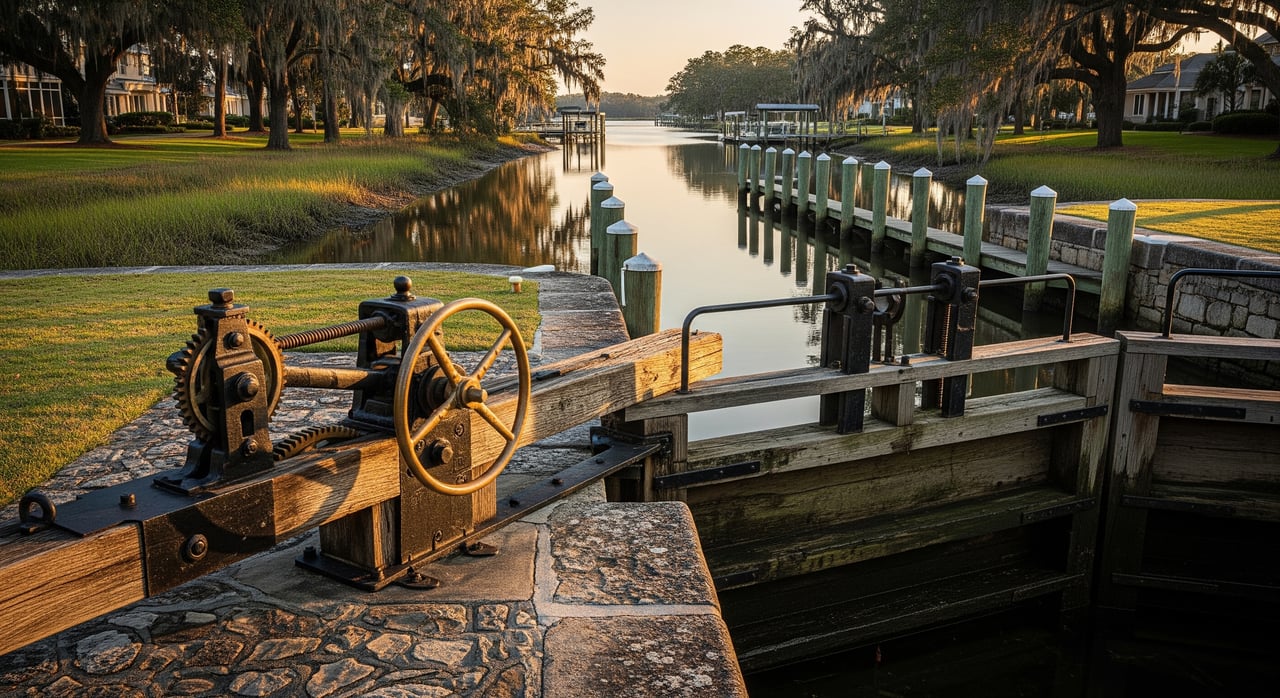
A harbour lock is a gated water structure that raises or lowers boats between two bodies of water at different levels. In a residential setting, it typically separates a protected interior basin or lagoon from a tidal creek or the Intracoastal Waterway. You pass through it when the inside and outside water levels do not match.
Communities use locks to maintain a more constant interior water level at docks and boat lifts. That consistency reduces vertical movement that can wear on pilings and equipment. Locks also help reduce wake inside the basin, improve security by controlling access, and support sediment management by limiting full tidal exchange.
Residential locks are usually smaller than commercial systems. You’ll often see reinforced gates, control machinery, fendered walls for tie-offs, and an operator’s station. Operations are typically managed by a harbormaster or HOA staff rather than a federal agency.
Wexford Harbour sits within Beaufort County’s tidal environment, where daily tides and occasional storm surge shape local boating. A private lock helps the community maintain a steadier interior water level and a calmer place to dock small boats, paddleboards, and kayaks. It also provides controlled access between the harbour and nearby waterways.
Exact procedures, dimensions, and operating hours are set by the HOA or harbormaster and may change over time. Before you buy, ask for the current harbour and lock rules, vessel limits, and any reservation requirements for transits. Because every community’s system is unique, confirmation from the primary documents is essential.
While procedures vary by community, a small residential lock typically follows a simple sequence:
Take cues from the operator and posted rules. If reservations are required during peak times, plan ahead so you are not rushed.
Every lock has limits for length, beam, draft, and sometimes air draft. There may be scheduling windows, single-vessel cycles, or priority rules that affect wait times. Confirm your boat’s fit and any guest or transient policies before committing to a slip or private dock within the basin.
Even with a lock, sediment can build up over time. Communities typically address this through periodic dredging, guided by permits and professional studies. As a buyer, review the dredging history, frequency, methods used, and how costs have been assessed to owners.
Hurricane planning is also critical. Locks add protection for everyday wake and tides, but they do not remove storm surge risk. Ask for the community’s storm protocols, including when gates are secured, whether boats must be removed or double-secured, and how emergency access is managed during severe weather.
Insurance requirements may apply for vessels kept within the harbour or at community facilities. Request minimum coverage levels, proof-of-insurance rules, and any special conditions tied to slip use or transfers.
A lock reduces the day-to-day tidal swing inside the basin. That helps docks and lifts, but it can also slow flushing, which relates to salinity, water temperature, and dissolved oxygen levels. Communities often address these dynamics through monitoring and management plans.
Structures, dredging, and harbour operations typically require oversight and permits. In South Carolina, that often involves the U.S. Army Corps of Engineers, the South Carolina Department of Natural Resources, the South Carolina Department of Health and Environmental Control, and local county permitting. Ask to see copies of permits, any environmental assessments, and recent water-quality reports tied to the basin.
For many buyers, a private, lock-protected harbour is a lifestyle upgrade. You enjoy calm water at your dock, simpler boarding, and controlled access to the creek and ICW. Families appreciate the sheltered setting for small craft and paddling. These benefits can support the perceived value of waterfront homes or slips within the basin.
There are tradeoffs. Locks may introduce wait times, and vessel-size limits can exclude larger yachts or tall-rig sailboats. Ongoing maintenance, dredging, and capital repairs may require HOA budget allocations or special assessments. Smart buyers study the association’s reserve planning, past marina expenses, and any pending projects so they understand total cost of ownership.
If you are weighing Wexford against other gated or marina communities in the Beaufort-Hilton Head area, focus on real-world boating convenience and ownership structure. Ask how long it takes, on average, to reach open water or the ICW from your dock. Confirm whether slips are deeded, assigned, leased, or waitlisted. Note available amenities like fuel, pump-out, or on-site services, and compare those to your actual needs.
Also review governance. Some communities have robust reserves and predictable fee schedules. Others rely on special assessments for major work. Understanding how decisions are made, and how costs have been shared historically, will help you compare apples to apples.
Use this quick list to request documents and confirm details before you buy or bring a boat into Wexford Harbour:
Operational and access
Maintenance and costs
Regulatory and environmental
Legal and insurance
Navigation practicalities
If you want stable dock heights, calmer water, and managed access, a lock-protected harbour is a compelling feature. It makes everyday boating simpler for families and guests, and it can elevate the overall experience of living on the water. At the same time, it pays to understand vessel limits, scheduling, and community budgets so your boat, your plans, and your property all align.
When you are ready to compare communities or evaluate a specific Wexford property, you deserve guidance tailored to how you live and boat. For a private conversation about your goals, local tradeoffs, and the documents that matter most, connect with Kelly Ruhlin.
Stay up to date on the latest real estate trends.


When it comes to buying or selling a home, it takes more than listings and offers — it takes a trusted partner who understands your unique goals. With Kelly Ruhlin, you’ll receive expert market insight, personalized advice, and a seamless experience from start to finish.