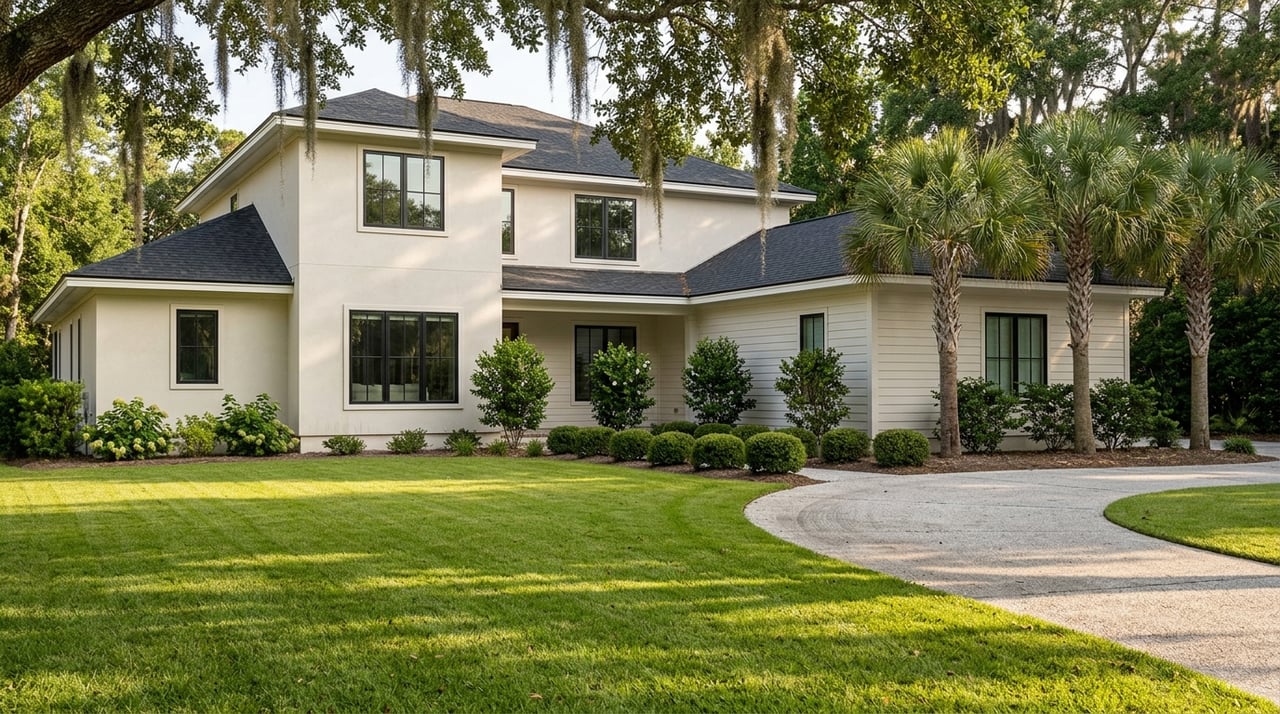
Building Or Remodeling On Larger Lots In Spanish Wells
July 16, 2026
July 16, 2026
Thinking about building new or taking on a major remodel in Spanish Wells? On larger lots, the opportunity can feel exciting, but so can the number of moving parts. In a water-adjacent Hilton Head Island neighborhood with historic roots, mature trees, drainage considerations, and layered approvals, the smartest projects start with a clear plan. This guide will walk you through what to consider before you expand, rebuild, or redesign your property in Spanish Wells. Let’s dive in.
Spanish Wells is on Hilton Head Island in Beaufort County, within the Town of Hilton Head Island. The area is identified by the Town as a historic Gullah neighborhood, and it is also recognized as one of the island’s largest master-planned communities. That combination gives the neighborhood a distinct context for new construction and major renovations.
On a larger lot, you may have more flexibility, but you also have more site conditions to think through. Tree canopy, views, drainage, setbacks, and outdoor-living placement can all shape what makes sense for the property. In Spanish Wells, those details are not secondary. They are often central to the design.
The Town’s land-management rules aim to preserve tree canopy and significant trees. For many owners, that means the best project is not necessarily the one that covers the most ground. It is the one that works with the lot’s existing features while still improving how you live in and enjoy the home.
When you look at a larger lot, it is easy to focus on square footage first. In Spanish Wells, it usually makes more sense to begin with the property itself. Before you finalize a plan, it helps to understand the lot’s flood zone, tree layout, drainage patterns, and any existing buffers.
That early step can save time and money later. A design that looks perfect on paper may need meaningful changes once elevation rules, protected trees, or drainage constraints come into focus. Starting with site conditions often leads to a better end result and a smoother approval process.
This is especially important in a neighborhood where recorded covenants and drainage agreements are part of the built environment. Exterior improvements should be reviewed early against both Town requirements and any association-level rules that may apply.
If you are planning a new home, addition, or significant exterior work, assume permits will be part of the process. The Town states that a building permit is required for new construction, additions, re-roofing, siding, and other structural alterations. Permits can also be required even if you plan to do the work yourself.
For larger remodels, the scope of work matters. If a project moves beyond cosmetic updates and starts changing structure, systems, or the building envelope, permit review becomes a key checkpoint. This is one reason it helps to define the work clearly before hiring trades or ordering materials.
Hilton Head Island currently lists the 2021 International Building Code and 2021 International Residential Code, along with related 2021 code families, as adopted effective January 1, 2023. Projects also need to comply with the Town’s municipal code.
Not every remodel follows the same path. The Town’s permit forms indicate that larger projects may move into additional review tracks, including Major Site Development Plan Review for new structures or changes to existing structures or density.
For owners of larger lots, that matters because site work often expands along with the house itself. A new footprint, reworked driveway, pool area, guest structure, or large outdoor-living addition can affect more than the home. It can also affect drainage, tree retention, and site layout in ways that draw more review.
Some parcels on or near Spanish Wells Road may also fall under Corridor Overlay District rules. The Town uses a Major Corridor Review application for certain new development, additions, and alterations within that district.
In coastal areas, flood-zone details can influence almost every major decision. Hilton Head Island separates lower-risk X and X-Shaded zones from higher-risk AE zones. The difference can materially affect what is possible on a specific parcel.
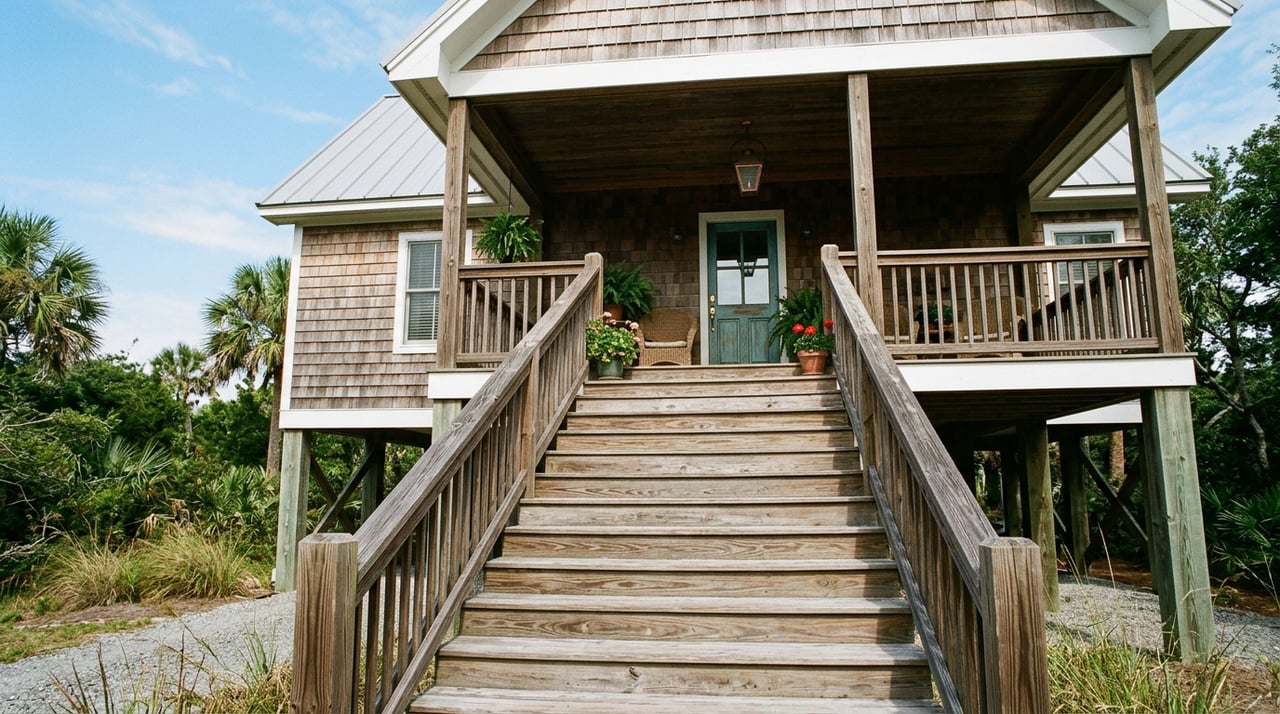
In AE zones, residential structures and their service equipment must be elevated no lower than 3 feet above the base flood elevation or 13 feet above mean sea level, whichever is higher. For a new build or major remodel, that can influence the first-floor height, stairs, porch design, entry sequence, and even how outdoor spaces connect to the home.
There is another threshold to know. If the cost of rebuilding, rehabilitating, adding to, or otherwise improving a structure equals or exceeds 49% of the building’s assessed or appraised value, the structure must comply with the current Flood Damage Controls Ordinance.
That does not mean every older home will need the same solution. It does mean flood planning should happen lot by lot and house by house, not by neighborhood assumption.
On larger Spanish Wells properties, mature trees can be one of the lot’s biggest assets. They shape privacy, shade, curb appeal, and the overall feel of the homesite. They can also directly affect what and where you build.
Hilton Head Island requires a Natural Resources Permit before a person cuts, destroys, moves, removes, transplants, prunes, or limbs any tree, subject to the ordinance’s exemptions. The Town also uses a Tree Tally Sheet to determine whether supplemental tree plantings will be required for new development.
That means a pool, detached structure, expanded driveway, or wider rear patio may involve more than hardscape planning. If trees are part of the affected area, you will want to understand the review process early.
In buffer areas, existing trees are supposed to be preserved and used as part of the buffer where possible. If an existing building increases by more than 50%, the buffers must be brought into compliance with current standards. On some properties, that can make tree preservation a major part of the design strategy.
Because Spanish Wells has Town-recognized stormwater infrastructure and maintenance agreements involving the property owners association and club, drainage planning is a practical part of larger-lot improvements. This matters whether you are building new or remodeling an existing home.
Grading changes, larger driveways, patios, pools, and other hardscape additions can affect how water moves across a site. On a big lot, it may be tempting to treat those items as separate upgrades. In reality, they often work best when planned together.
A strong project plan looks at the house, outdoor-living spaces, and drainage as one system. That approach can help protect both usability and long-term property value.
Town approval is only one piece of the puzzle. Spanish Wells is part of a planned development with recorded covenants and referenced drainage agreements, so association-level review should be checked separately and early.
This matters most with visible exterior changes. Rooflines, additions, driveways, landscaping changes, and site improvements may all raise questions beyond the building permit itself. Confirming those requirements upfront can reduce redesigns and delays.
For sellers thinking ahead, this is also about preserving marketability. Buyers tend to value improvements that were planned carefully and completed with the right approvals in place.
For a major project in Spanish Wells, contractor selection is not just about pricing. It is also about experience with Hilton Head Island’s permitting process, construction standards, and site-management expectations.
South Carolina requires a current license or registration to engage in residential building, specialty contracting, or home inspecting activities. The Residential Builders Commission licenses or registers individuals who perform residential building and specialty work.
The Town notes that in most cases, the contractor submits the building permit. Town materials also describe construction-management standards that emphasize site management, waste, parking, access, and storm-event preparedness.
That local familiarity can be especially valuable on larger lots where site work, staging, and exterior improvements play a bigger role. The right builder can help coordinate the practical details that keep a project moving cleanly.
Some owners consider managing the project themselves. While that may sound appealing, the Town explains that if an owner acts as their own contractor on an owner-occupied project, Beaufort County requires an Unlicensed Residential Builder’s Disclosure Statement.
The Town also states that the home should not be sold or rented for two years after completion if the owner is relying on that self-build arrangement. For owners who want flexibility or may consider a future sale, that is an important detail to understand before moving forward.
On a high-value property, the long-term implications can matter just as much as the construction budget. It is worth weighing convenience, compliance, and resale timing together.
In Spanish Wells, the most durable improvements are often the ones that respect the lot instead of overpowering it. Projects that work with tree canopy, elevation needs, drainage, and approval layers tend to age better from both a functional and resale perspective.
That does not mean you have to think small. It means the strongest investments are usually thoughtful ones. Well-placed additions, usable outdoor-living space, and site-sensitive design often do more for a property than square footage alone.
If you are buying, selling, or evaluating a larger-lot property in Spanish Wells, it helps to look beyond finishes and floor plans. The real opportunity is in understanding what the lot can support and how smart planning can protect both lifestyle and legacy.
Whether you are preparing a property for market, weighing a purchase, or deciding if a remodel makes financial sense, a local strategy matters. For a discreet, consultative conversation about Spanish Wells real estate, connect with Kelly Ruhlin.
Stay up to date on the latest real estate trends.


When it comes to buying or selling a home, it takes more than listings and offers — it takes a trusted partner who understands your unique goals. With Kelly Ruhlin, you’ll receive expert market insight, personalized advice, and a seamless experience from start to finish.